
Are you wondering how you can drive footfall to your physical store in 2026?
We believe that bricks-and-mortar retail isn't dying, it's evolving.
Here's the full-funnel digital playbook for shopping destinations and retail brands serious about getting more people through the door, based on what we’ve seen works best:
Footfall is the lifeblood of physical retail.
Yet most brands are still running disconnected campaigns, a paid ad here, an email blast there and wondering why conversion from digital touchpoints to in-store visit remains elusive.
The brands winning in 2026 treat driving footfall as a full-funnel campaign, not a bolt-on.
That means a structured approach: organic visibility and local SEO as the foundation, layered with paid amplification, social content, email, and event activation, all pulling in the same direction.
Whether you manage a single store or oversee an entire retail and leisure destination, these are the digital tactics that move the needle.
When a shopper types "beauty stores near me" or "best restaurants in Brent Cross", Google decides what appears.
If your Google Business Profile isn't optimised, you're invisible at the most critical decision moment.
For estate-level operators, every individual tenant should have a verified, fully completed Google Business Profile (GBP).
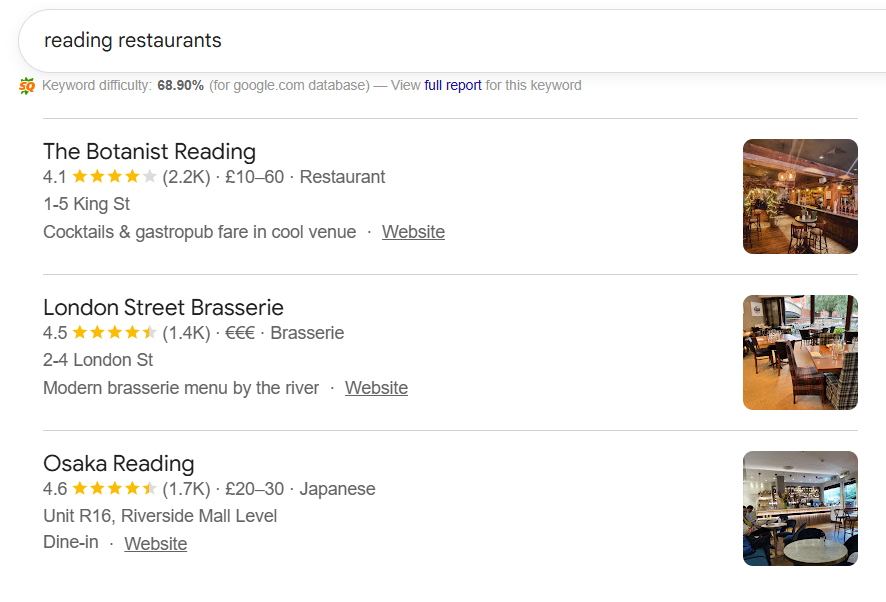
This free digital storefront allows businesses to manage how they appear on Google Search and Maps.
Here’s how you can optimise it:
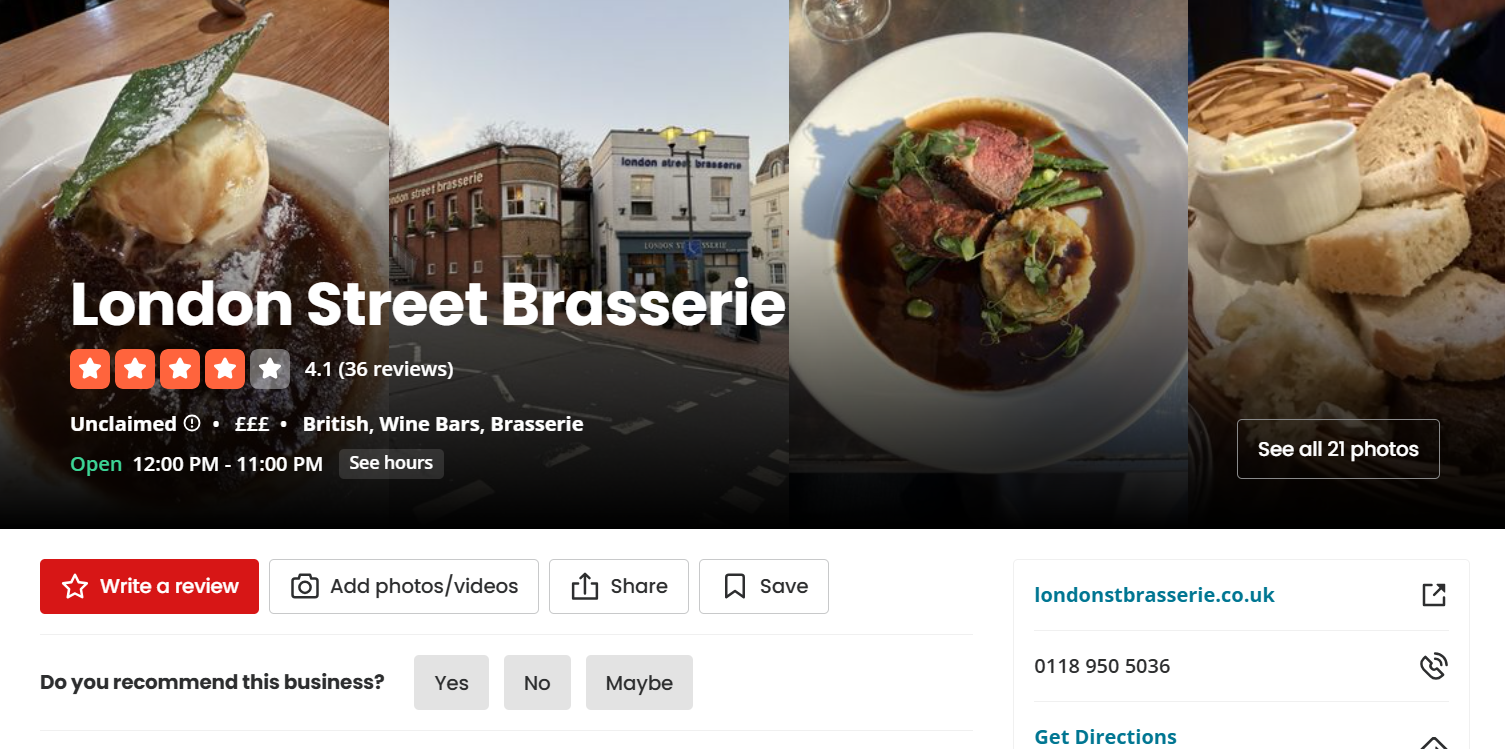
For brands with multiple locations, localised landing pages on your website are also non-negotiable.
A page built around “shops in [location]”, with genuinely relevant local content, will consistently outperform a generic store finder.
76% of people who search for something nearby on their smartphone visit a business within a day. Local SEO isn't a nice-to-have; it's the highest-intent channel you have.
You can start by building out a keyword strategy around high-intent local terms.
Think "things to do in [location] this weekend", "restaurants open now [location]", "[brand] [location] opening times".
These are purchase-intent searches; meet them with optimised content (i.e., relevant to their search), and you earn the visit before your competitors even know they're competing.
Social media doesn't just build awareness, it manufactures desire.
The goal with organic social for physical retail is simple: make your centre or store somewhere people feel they're missing out on if they're not there.
This means moving beyond product posts.
Showcase the experience: the atmosphere on a Saturday afternoon, the new restaurant that's just opened, the limited edition that's in-store only and the personality of the destinaion.
Behind-the-scenes content, tenant takeovers, and real customer moments outperform polished marketing creative on every organic platform.
For shopping destinations specifically, a strategically considered content calendar built around its long-term brand positioning approach, limited-time events, seasonal moments, and relatable content that speaks to your audience is the framework that drives consistent, recurring visits, not one-time trips.
TikTok and Instagram Reels are the primary drivers of discovery; the algorithm rewards authenticity and locality.
Paid search and paid social are the accelerants. Once your organic foundations are in place, paid media lets you reach in-market shoppers at exactly the right moment and with geo-targeting, you can make sure you're only spending budget on the people you want to reach.
For footfall campaigns, Performance Max campaigns on Google with store visit conversion goals are the most efficient paid search setup in 2026. Feed it your Google Business Profile data, set geo-radius bidding, and let the algorithm optimise for physical visits, not just clicks.
On Meta, dynamic location ads serve relevant creative to people near each individual store or destination essential for operators managing multiple sites. Layer in retargeting of previous website visitors and you have a warm audience who already showed intent
+89% increase in store visit conversions seen by brands using Performance Max with location assets versus standard Search campaigns alone.
Email remains one of the highest-ROI channels in retail, yet most brands use it to sell products online, not drive visits in-store.
Shift the framing. Use your CRM to remind, excite, and incentivise people who already know you.
"This weekend at [centre]" roundups, exclusive in-store offers available to subscribers only, early access to events, and personalised recommendations based on past visit behaviour.
These are the email formats that turn opens into footfall.
Segmentation matters: someone who visits monthly needs a different message than someone who hasn't been in six months.
For estate-level operators, coordinating email sends around anchor events (e.g., Christmas light switch-on, school holiday programming, pop-up markets) creates campaign moments that lift footfall across the whole estate, not just individual tenants.
The most powerful footfall driver isn't a discount; it's an event.
A reason to be there that has nothing to do with the transactional act of buying something. This is the insight that separates retail destinations from retail commodities.
Full-funnel event campaigns, from awareness through paid and organic, to consideration via email and retargeting, through to conversion on the day, are the highest-complexity, highest-reward play in the footfall toolkit.
They take planning, but they generate data: attendance, dwell time, spend per visit, and new vs returning visitors.
Critically, events create content.
A well-produced event gives you weeks of social material, a PR hook, and user-generated content from attendees that extends reach organically long after the event itself.
The digital campaign and the in-person moment feed each other.
The biggest gap in most retail digital strategies isn't channel coverage, it's attribution.
Proving that a digital touchpoint caused a physical visit remains the hardest problem in the industry, but it's a solvable one.
Start with what Google gives you for free: store visit conversions in Performance Max, direction requests and calls tracked via Google Business Profile. Then layer in footfall data from providers like Springboard or Visitor Insights if available at the estate level.
For email, track offer redemption in-store as a proxy for visit attribution.
The goal is a reporting framework that connects digital spend to physical footfall, not a proxy metric like impressions or even web traffic.
This is where more advanced partners and platforms come into play. Agencies like PATTRNS go beyond surface-level reporting by ingesting and unifying multiple data sources, including paid media, CRM, and footfall data, into centralised dashboards. This allows for a clearer view of which channels, audiences, and campaigns are actually driving in-store visits.
More importantly, this data isn’t just used for reporting, it’s used to make decisions. By identifying which touchpoints and audience cohorts are delivering the highest cost-efficient footfall, campaigns can be continuously optimised in-flight to drive incremental visits, not just clicks.
When you can show that a campaign drove incremental visits at a cost-per-visit that beats every other channel, the marketing budget conversation changes entirely.
Footfall doesn't happen by accident.
It happens when a shopper discovers you at the right moment (SEO), sees you repeatedly in their feed (organic and paid social), gets a compelling reason to visit (email, events, newness), and when all of those touchpoints are being measured and optimised.
That's not a set of tactics, that's a campaign.
The brands and estate operators taking footfall seriously in 2026 are running it exactly like that.
The ones that aren't are wondering why digital spend isn't moving their in-store numbers.
Driving footfall in 2026 requires more than isolated tactics; it demands an integrated, data-led approach that connects every digital touchpoint to real-world behaviour.
That’s where PATTRNS comes in.
As a full-service digital marketing agency, PATTRNS supports brands and destinations across the entire journey, from strategy and audience development through to activation, optimisation, and advanced measurement.
By combining expertise in paid media, organic social, SEO, and data engineering, alongside AI and machine learning capabilities, PATTRNS helps unify fragmented marketing efforts into a single, performance-driven ecosystem.
Through centralised data architecture, live dashboards, and actionable insights, brands gain full visibility of what’s driving footfall and, crucially, how to scale it.
Because in today’s landscape, it’s not just about driving traffic.
It’s about proving it, understanding it, and continuously improving it.
PATTRNS can audit your current local SEO, manage your GBP optimisation, and build a review and citation strategy tailored to your restaurant.
.webp)
.webp)
